
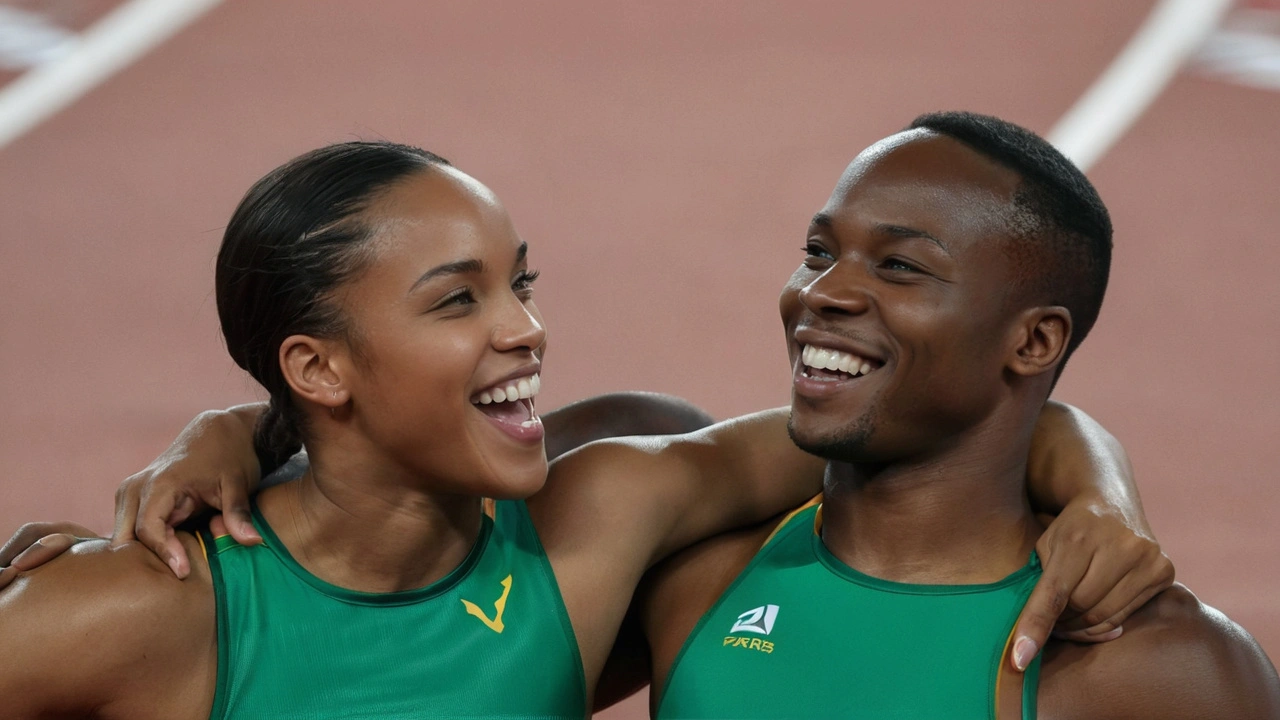
The anticipation is palpable as South Africa's men's 4x100m relay team charges into the final at the Paris 2024 Olympics, guided by the formidable Akani Simbine. In a gripping heat that demanded adjustments and resilience, the team secured their place with an impressive time of 37.94 seconds. This qualification not only exemplifies their indomitable spirit but also offers a beacon of hope amid an Olympic campaign marked by mixed results for Team South Africa.
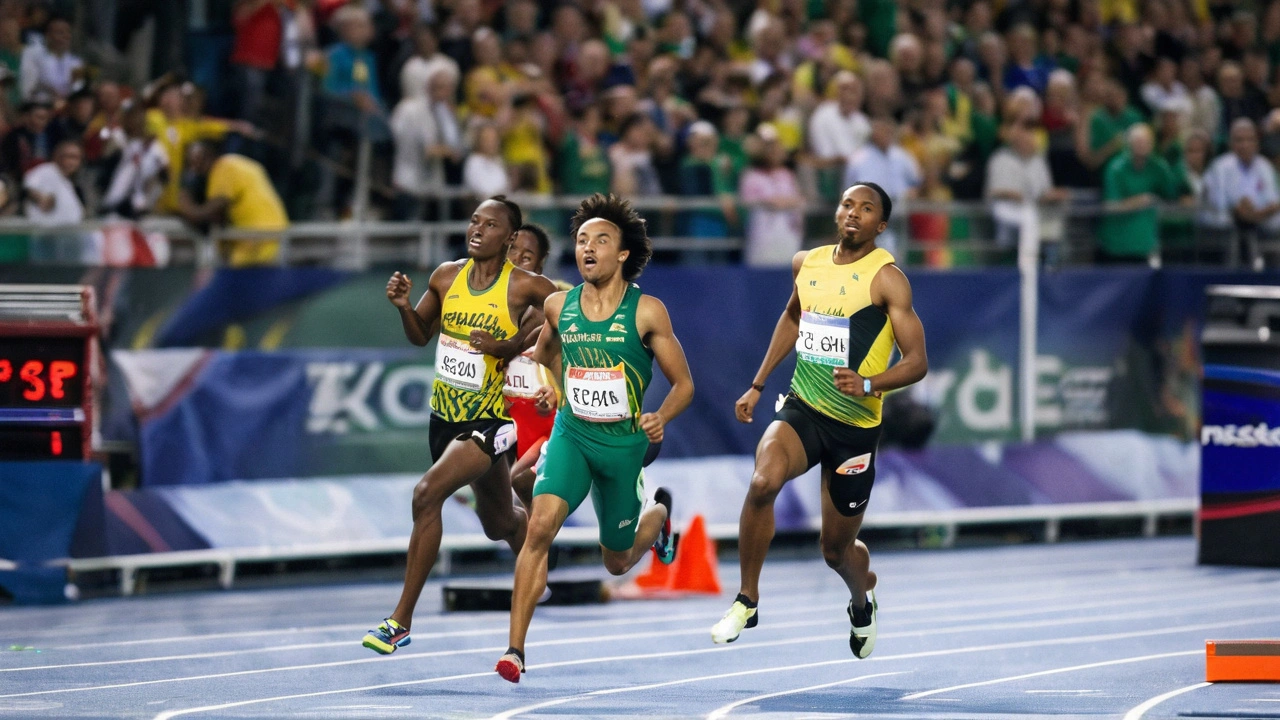
The journey to the final was not without its challenges. When relay team member Benjamin Richardson suffered an untimely injury, the team had to swiftly reorganize their lineup. Bayanda Walaza stepped up to commence the race with exceptional speed and precision, passing the baton to Shaun Maswanganyi, who admirably filled Richardson's shoes. Bradley Nkoana maintained the momentum in the third leg, before handing over to Akani Simbine. Simbine, renowned for his lightning-fast sprints, delivered a stellar anchor leg that clinched the team's second-place finish in their heat.
Akani Simbine, South Africa's sprinting sensation, has been a pivotal figure for his team. His performance not only reaffirmed his individual prowess but also demonstrated the synergy and coordination crucial in relay races. This achievement becomes even more significant considering the broader context of South Africa's performance at the Games. Currently ranked 37th in the medal standings, the nation has managed to secure one gold, one silver, and two bronze medals across various sports.
Their fiery relay performance breathes new life into a campaign that has seen highs and lows. Highlighting individual triumphs, Jo-Ane van Dyk advanced to the javelin final, Edmund du Plessis progressed to the men's 800m semi-finals, and Brian Raats earned a spot in the men's high jump final. These athletes' dedication and performances are testament to the diverse talent pool Team South Africa has nurtured.
Adapting Under Pressure
The sudden reshuffling within the relay team tested their ability to adapt under pressure. Benjamin Richardson's injury could have been a significant setback, but it instead became a rallying point. Shaun Maswanganyi, stepping into Richardson's place, exemplified the depth of talent in South Africa's squad. Despite the changes, the team exhibited exceptional handover technique and maintained their rhythm throughout the race.
Walaza's powerful start was complemented by Maswanganyi's seamless transition. Nkoana kept the team in contention with his consistent pace, setting the stage for Simbine's grand finale. It was in this final leg that Simbine's years of training and experience shone through. His electrifying sprint left no room for doubt, propelling the team to finish just behind the heat leaders.
This performance has elevated expectations for the final, scheduled for Friday at 19:45. All eyes will be on the team as they strive to add another medal to South Africa's tally. The relay final promises a thrilling contest where every fraction of a second will matter.
Broader Impacts: South Africa's Olympic Journey
Team South Africa's journey at the Paris 2024 Olympics has been a roller-coaster ride, echoing the unpredictable nature of competitive sports. While the men's 4x100m relay team's success is a highlight, the broader picture of their Olympic campaign features a mosaic of emotions and performances.
At present, the nation stands 37th in the medal standings, a figure reflecting the highs and lows of their journey. The gold, silver, and two bronze medals signify moments of triumph that have punctuated their campaign. These achievements come from varied disciplines, showcasing the versatility and tenacity of South African athletes.
The relay team's performance has rekindled hope and excitement among supporters. The progress of athletes like Jo-Ane van Dyk in javelin, Edmund du Plessis in the 800m semi-finals, and Brian Raats in high jump attests to a collective determination. Each athlete's journey brings its own set of challenges and victories, contributing to the overarching narrative of Team South Africa at the Olympics.
Wider Implications
Beyond the individual accolades, the Olympics serve as a platform for nations to showcase their sporting prowess. For South Africa, the mixed results outline areas for growth while highlighting pockets of excellence. Sports like athletics, diving, canoeing, golf, and sport climbing have seen representations, each adding a unique chapter to the country's Olympic story.
The men's 4x100m relay team, in particular, symbolizes a resurgence. Their qualification for the finals amidst adversity is a testament to resilience and strategic acumen. By adapting to unforeseen circumstances and delivering a top-notch performance, they have set a benchmark for teamwork and resourcefulness.
As the relay team gears up for the final, the entire nation waits with bated breath. Their performance not only holds the promise of adding to the medal tally but also embodies the spirit of overcoming odds and reaching for greatness. In a competition where minute differences can determine the outcome, South Africa's relay team stands on the precipice of creating history.
The final, scheduled for Friday evening, is more than just a race. It is a culmination of relentless training, overcoming challenges, and an unwavering belief in their potential. The journey of the 4x100m relay team is a microcosm of the broader Olympic experience - an interplay of efforts, adjustments, and moments of brilliance that define the essence of sportsmanship.
As Akani Simbine and his fellow team members prepare to take their marks for the final showdown, they carry the hopes of a nation. Their performance will not just be a reflection of their speed but a narrative woven from determination, teamwork, and an undying quest for excellence. The road to the final has been anything but easy, but it is this arduous journey that sets the stage for what promises to be a race etched in Olympic history.
Cate Shaner
August 10, 2024 AT 19:01Let’s be real - this ‘resilience’ narrative is just PR spin wrapped in a 37.94-second highlight reel. The fact that they had to reshuffle mid-heat because someone got injured doesn’t scream ‘strategic acumen,’ it screams ‘depth chart was a dumpster fire.’ And don’t get me started on calling Simbine a ‘sprinting sensation’ - he’s fast, sure, but he’s not Usain Bolt with a South African accent. This is Olympic B-tier talent with a very well-funded marketing team.
Also, 37th in the medal count? That’s not a rollercoaster, that’s a slow-motion train wreck with a few scenic detours. Congrats on your one gold and three bronze - now go watch a real sporting nation compete.
Thomas Capriola
August 11, 2024 AT 13:52They’re not even top 10 in sprinting. Why are we still talking about this?
Rachael Blandin de Chalain
August 12, 2024 AT 10:19While I appreciate the narrative of resilience and adaptability showcased by the South African relay team, I must emphasize the importance of contextualizing athletic achievement within the broader framework of international competition. The substitution protocol, while disruptive, demonstrates a commendable depth of preparation and coaching acumen. Furthermore, the team’s ability to maintain technical precision under duress reflects not merely physical prowess, but a disciplined institutional culture.
It is worth noting that the Olympic Games serve as a platform not solely for medal acquisition, but for the dignified representation of national sporting ideals. In this light, the performance of the 4x100m relay team, irrespective of final placement, constitutes a significant and admirable contribution to the spirit of the Games.
Soumya Dave
August 12, 2024 AT 15:54YOOOOO SOUTH AFRICA DID IT!!! 🇿🇦🔥 This is what heart looks like! They lost one runner, and instead of folding, they pulled together like a family - Bayanda started like a rocket, Shaun stepped in like he was born in that lane, Bradley kept the fire alive, and then AKANI SIMBINE? BRO. He didn’t just run - he LAUNCHED. That anchor leg? Pure poetry in motion.
People keep talking about medals like that’s the only measure of greatness, but this? This is legacy. This is the kind of performance that makes kids in Soweto believe they can run with the giants. You don’t need to be #1 in the world to be #1 in heart - and this team? They’re champions in every way that matters.
And don’t sleep on Jo-Ane van Dyk or Brian Raats - they’re out there grinding too. This isn’t just about one race - this is about a whole nation rising. Every sprinter, every javelin thrower, every high jumper - you’re not just athletes, you’re symbols. Keep going. The world is watching, and we’re all proud of you.
Now go out there Friday and make history. Not for the medals. For the dream. For the kids who are watching right now, hoping to be you one day. You’ve already won.
Chris Schill
August 13, 2024 AT 02:27While the narrative of adaptability is compelling, the statistical context warrants clarification: South Africa’s 37.94-second time places them 7th among all qualifying teams, well behind the top three (all under 37.50). The substitution of Richardson for Walaza, while tactically sound, was reactive rather than strategic - a testament to depth, not planning.
That said, the handoffs were technically proficient, with minimal baton loss and consistent acceleration across legs. Simbine’s anchor leg, clocked at approximately 8.92 seconds, was among the fastest of the heat - a notable individual performance, though not unprecedented on the global stage.
It is worth recognizing that the broader Olympic context for South Africa remains one of underperformance relative to historical potential. While the relay qualification is a positive outcome, it does not signal systemic improvement in athletics development infrastructure. Celebrate the moment, but contextualize it within the long-term challenges of funding, coaching, and athlete retention.
Also: the javelin and high jump qualifiers are legitimate achievements. Van Dyk’s personal best in qualifying was 63.42m - a national record. That deserves equal attention.