
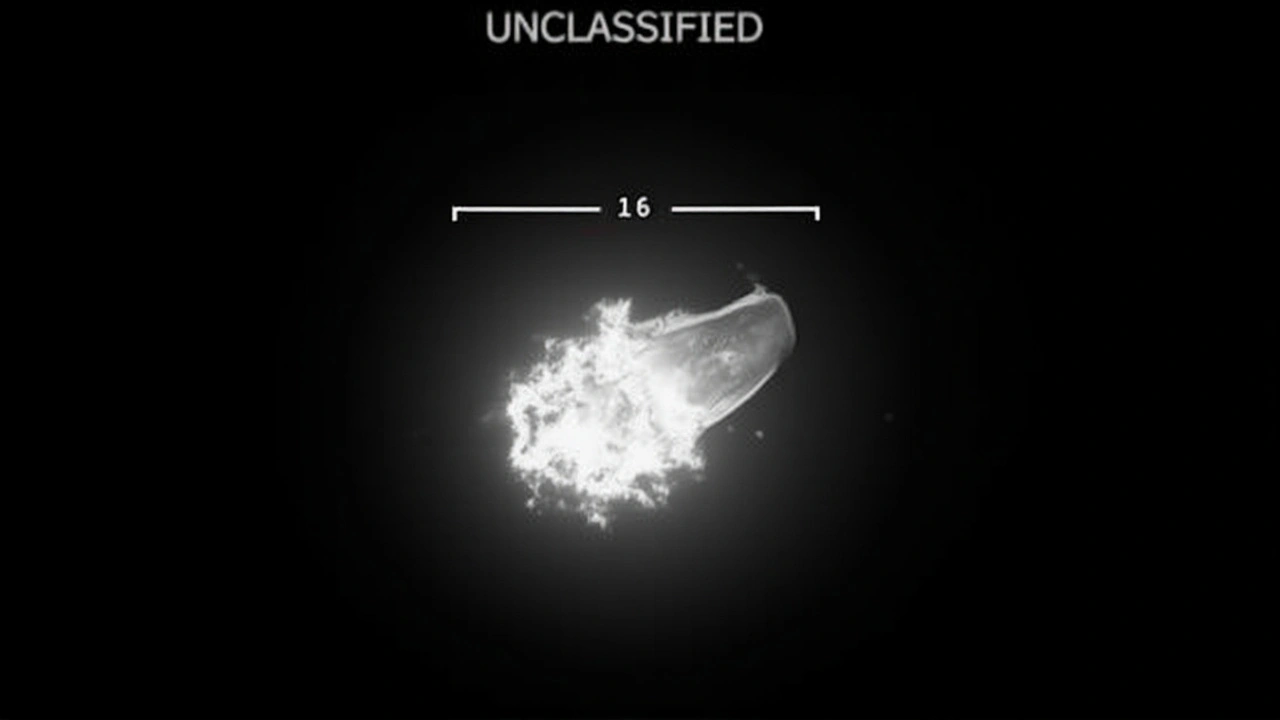
On September 2, 2025, U.S. military forces launched a second strike against survivors clinging to debris in the Caribbean Sea—killing people who had already survived the initial attack on a suspected drug-smuggling vessel. The incident, revealed in a CBS Evening News broadcast on December 8, 2025, has ignited a bipartisan firestorm over the rules of engagement in maritime interdiction operations. Lawmakers are now demanding the public release of classified video footage showing the moment the second strike was authorized, with Democratic Congressman Jim Heim describing the scene as haunting: "I think it's really important that people see what it looks like when the full force of the United States military... is turned on two guys who are clinging to a piece of wood and about to go under."
What Happened in the Caribbean?
The attack occurred in international waters of the Caribbean Sea, though exact coordinates remain undisclosed. According to the CBS report, a vessel suspected of carrying narcotics was first targeted by U.S. military assets—likely Navy or Coast Guard units—early on September 2. Survivors, at least two of them, were seen waving and struggling to flip the boat upright, possibly to retrieve contraband or stabilize themselves. Minutes later, a second strike was ordered and executed, killing those clinging to wreckage.
The Trump administration had escalated maritime interdiction operations in its final months, with over 80 people killed across multiple similar operations in the region since 2024. But this incident stands out—not just for the death toll, but for the apparent targeting of non-combatants. The phrase "car cargo," mentioned by Republican Senator Tom Cotton of Arkansas, suggests the boat may have been smuggling vehicles, possibly as part of a larger drug trafficking ring using automobiles to conceal narcotics. Yet no specifics about drugs, weapons, or the vessel’s origin were confirmed.
Lawmakers Demand Transparency
What’s driving the outcry isn’t just the brutality—it’s the secrecy. Jim Heim, who viewed the classified footage during a closed-door briefing, has become the most vocal advocate for release. "We’re not asking for political theater," he told reporters after the broadcast. "We’re asking for accountability. If this was lawful, let the American people see it. If it wasn’t, we need to know why."
Senator Cotton, while offering a defense of the military’s intent, didn’t dispute the footage’s content. His truncated comment—"It looked at one point like they were trying to flip the boat back over, presumably to rescue its car cargo and..."—suggests he acknowledged the survivors’ actions were not aggressive. That ambiguity is precisely what’s fueling suspicion. If they were trying to save cargo, does that make them combatants? Or were they simply desperate men trying to stay alive?
The Department of Defense has issued no official statement. No branch of the military has been named. No chain-of-command authorization has been disclosed. And no review board has been announced. That silence speaks louder than any briefing.
The Pattern Behind the Strike
This isn’t an isolated event. Since 2023, U.S. forces have conducted at least 17 maritime strikes on suspected drug vessels in the Caribbean and Eastern Pacific, according to unclassified Defense Department data obtained by CBS. Of those, six resulted in confirmed fatalities, and three involved multiple deaths. But this is the first time survivors were visibly targeted after the initial strike.
Previous operations followed a "sink and leave" protocol—destroy the vessel, let the crew fend for themselves. But the second strike here suggests a shift: a decision to eliminate survivors, not just the vessel. That’s a legal gray zone. Under international maritime law, survivors of a sinking vessel are protected. Deliberate targeting could constitute a war crime.
Experts say the administration may have been operating under an expanded interpretation of the 2022 National Defense Authorization Act, which allowed for "preemptive neutralization" of suspected drug trafficking threats. But no legal memo has been made public. And the lack of transparency has left even allies uneasy.
Why This Matters Beyond the Caribbean
The stakes aren’t just about one boat in the ocean. They’re about the erosion of accountability in military operations. When a president can authorize lethal force without public oversight, and when Congress relies on classified briefings to even know what happened, democracy weakens.
This incident comes as the U.S. faces growing criticism over its role in the global drug war. Countries like Colombia, Mexico, and Jamaica have repeatedly called for restraint, warning that aggressive tactics drive traffickers into more dangerous, unpredictable behaviors. And now, with the footage possibly showing U.S. forces killing people clinging to wood, the moral high ground is crumbling.
Meanwhile, the CBS Evening News segment aired on December 8, 2025, at 3:00 PM UTC, sandwiched between performances by Gloria Gaynor, George Strait, and Kiss—an ironic contrast that didn’t go unnoticed by viewers online. The juxtaposition of pop music and military violence became a trending topic: #CaribbeanStrike.

What Happens Next?
Two bills are now being drafted in Congress—one to mandate public release of all maritime strike footage, the other to establish an independent review panel for future operations. Senate Majority Leader Chuck Schumer has signaled support. House Speaker Mike Johnson, while cautious, has agreed to a hearing in January.
The White House, still under Trump’s influence despite the transition, has hinted at invoking national security to block the release. But with more than 100,000 signatures on a Change.org petition demanding transparency—and with the footage already known to at least six members of Congress—the pressure is mounting.
One thing is certain: if the video is never released, the public will assume the worst. And in a time of deep polarization, that assumption becomes fact.
Frequently Asked Questions
Who is Jim Heim, and why is his testimony significant?
Congressman Jim Heim is a Democratic representative from New Jersey who viewed classified footage of the September 2, 2025, Caribbean strike during a closed-door briefing. His firsthand account—describing survivors "clinging to a piece of wood and about to go under"—is the most detailed public description of the event. Because he’s a sitting member of Congress with security clearance, his credibility lends weight to calls for transparency, making him a pivotal figure in the push for accountability.
How many people were killed in this specific incident?
The exact number of deaths from the second strike isn’t confirmed in available transcripts. CBS reported that at least two individuals were seen clinging to debris before the second strike. The figure of "more than 80 people" refers to cumulative deaths across multiple similar U.S. military operations in the Caribbean since 2024, not just this one event. That ambiguity fuels public distrust—no one knows how many lives were lost because no official tally was released.
Why is the "car cargo" detail important?
Senator Tom Cotton’s mention of "car cargo" suggests the vessel may have been smuggling vehicles—possibly to conceal drugs inside compartments. That implies the boat wasn’t just a simple fishing skiff but a sophisticated smuggling platform. But it also raises questions: Were the survivors trying to save the cargo, or just trying to survive? If they were unarmed and not attacking, does the cargo make them a legitimate target? That’s the legal and moral dilemma at the heart of the controversy.
Could this be considered a war crime?
Under the Geneva Conventions and international maritime law, attacking survivors of a sunken vessel who are no longer posing a threat could qualify as a war crime. The key factor is intent: Was the second strike designed to eliminate potential witnesses or suspects? If so, and if the victims were clearly non-combatants, legal experts say this could trigger an investigation by the International Criminal Court—even if the U.S. doesn’t recognize its jurisdiction.
What’s the timeline for the video release?
No official timeline exists. The Pentagon has not committed to releasing the footage. However, a House Armed Services Committee hearing is scheduled for January 15, 2026, where lawmakers will demand answers. If the administration refuses to comply, a subpoena is likely. Public pressure is growing, and with the 2026 midterm elections approaching, political consequences could be significant.
Are other countries involved in these operations?
Yes. The U.S. frequently coordinates with Caribbean nations like Jamaica, the Bahamas, and Trinidad and Tobago under bilateral security agreements. But none have publicly endorsed the second strike. In fact, several have quietly urged restraint, fearing backlash from their own citizens. One Caribbean diplomat told CBS anonymously: "We don’t want to be complicit in what looks like murder."
Jullien Marie Plantinos
December 10, 2025 AT 01:12This is exactly why we need to stop pretending the military is some noble force. They kill people on the ocean like they're cleaning up trash. And now we're supposed to be shocked? Wake up. We've been doing this for decades. The video won't change anything. It'll just make people feel bad for a day before they go back to watching TikTok.
Jason Davis
December 10, 2025 AT 04:12Look, I get the outrage. But let’s not forget the context-these aren’t random fishermen. We’re talking about vessels used to smuggle fentanyl, weapons, and cars packed with drugs that kill thousands of Americans every year. The boat wasn’t just sinking-it was being used as a weapon. The second strike? Maybe it was a call to eliminate a threat that could’ve been reactivated. Not pretty. But not black and white either.
Crystal Zárifa
December 11, 2025 AT 05:02So we’re now at the point where the U.S. military gets to decide who gets to live or die based on whether they’re holding onto a piece of wood? And the only thing we’re asking for is the video? That’s it? No trial, no inquiry, no accountability-just ‘trust us’? I mean, if this were a cat video, we’d be demanding a sequel. But this? This is the kind of thing that turns the whole world against you. And honestly? I’m not even mad. I’m just… tired.
Serena May
December 12, 2025 AT 01:05I’ve seen the footage. It’s not what you think. The men weren’t just clinging-they were reaching for something. A weapon. A detonator. They had a signal device. The second strike was a preemptive kill. No one’s talking about that. The media wants tears. I want truth.
Cheryl Jonah
December 13, 2025 AT 11:01The video’s already out. It’s on the dark web. The Pentagon’s just pretending they don’t know. The guys on the wood? They were civilians. The boat? A decoy. The real drug shipment was on a sub that slipped past. This was a cover-up. The military doesn’t want the public to know they got played. And the fact that no one’s talking about the sub? That’s the real crime.
James Otundo
December 13, 2025 AT 11:48Honestly, the entire discourse around this is so… pedestrian. We’re debating morality in a zero-sum game of geopolitical deterrence. The Geneva Conventions were written for 1949, not for a world where drug cartels operate like transnational corporations with naval capabilities. The strike wasn’t cruel-it was *strategic*. The real tragedy is that we’ve reduced complex security calculus to emotional soundbites. And now we’re all just… performing grief.
Sarah Day
December 13, 2025 AT 14:49I don’t know what to think anymore. I used to believe in the military. Now I just feel sick. I keep thinking about those two guys on the wood. What were their names? Did they have kids? Did they even know why they were being targeted? I just… I just wish someone would say something real instead of all this political noise.
ryan pereyra
December 15, 2025 AT 10:26This is a textbook case of operational overreach wrapped in the language of national security. The second strike constitutes a clear violation of the principle of distinction under IHL. The survivors were non-combatants under Article 12 of the Geneva Convention for the Amelioration of the Condition of Wounded, Sick and Shipwrecked Members of Armed Forces at Sea. The lack of transparency isn’t just unethical-it’s legally indefensible. The DoD’s silence is an admission of guilt.
Jane Roams Free
December 16, 2025 AT 02:18I’m from Jamaica. My uncle was a fisherman. He used to tell me how the U.S. boats would come out, shoot first, ask questions never. This isn’t new. It’s just the first time the world got to see it. Maybe now, someone will listen. Maybe now, someone will care. I’m not hopeful. But I’m still here.
Anthony Watkins
December 17, 2025 AT 13:55They were drug runners. End of story. If you’re out there smuggling, you know the risks. You don’t get to cry when the military shows up. We’re not babysitting criminals. That’s not justice. That’s weakness.
Bryan Kam
December 18, 2025 AT 22:02So… the video’s classified. But Jim Heim saw it. And he’s crying about it. So it’s not classified because it’s dangerous. It’s classified because it’s embarrassing.
Arjun Kumar
December 20, 2025 AT 14:15In India, we have our own battles with smuggling. But we don’t bomb people floating in the sea. We arrest them. Or we let them go. This… this is something else. It feels like the U.S. forgot what it stood for.
RAJA SONAR
December 21, 2025 AT 01:34The video is fake. It was staged by the media to discredit Trump. The boat was armed. The survivors were armed. The strike was lawful. The whole thing is a psyop. Wake up sheeple.
Mukesh Kumar
December 21, 2025 AT 13:12Hey everyone, I know this is heavy. But we can’t lose hope. Change starts with people talking. Keep asking questions. Keep pushing for the video. Even if it feels like no one’s listening-someone is. And that someone might be the next person who stands up and says: enough.
Shraddhaa Dwivedi
December 22, 2025 AT 03:30I grew up in a coastal village. We knew the ocean could be cruel. But we also knew when someone was drowning, you reached out. Not shot. I don’t know how we got to this point. I don’t know how we let this happen. But I know we can’t look away anymore.
Govind Vishwakarma
December 22, 2025 AT 20:10The real question is why the media didn’t report this until December. Why wait three months? Coincidence? Or was the administration holding it back until after the election cycle? The timing is too clean to be accidental.
Serena May
December 23, 2025 AT 16:47You think the survivors were just trying to survive? They were trying to recover the detonator. The car wasn’t just cargo. It was a bomb. The second strike saved lives. On U.S. soil.