
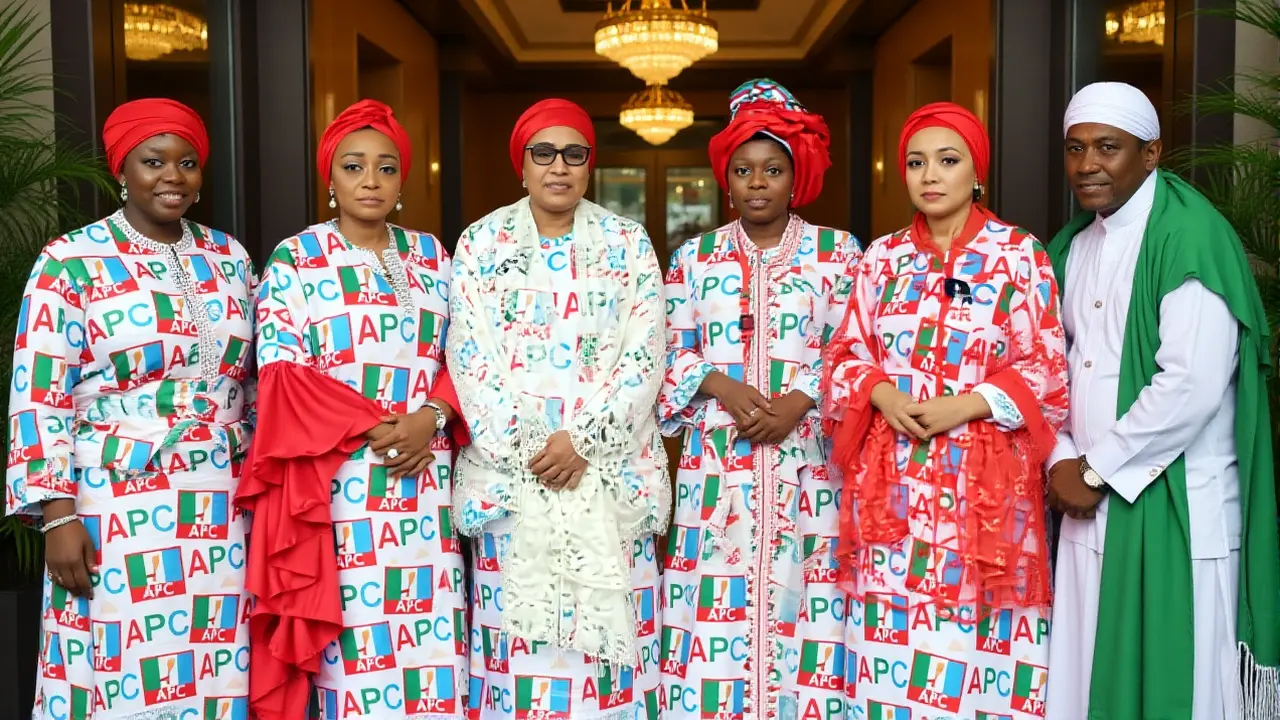
When Senator Oluremi Tinubu, First Lady of Nigeria, gathered party loyalists at the Presidential Villa last Monday, the message was blunt: numbers win elections, not gender. The meeting on June 1, 2026, wasn't just a routine political get-together; it was a strategic pivot ahead of the 2027 general elections, signaling that the ruling party is doubling down on grassroots intensity.
Here’s the thing about Nigerian politics—it’s won in the wards, not the boardrooms. At this gathering in Abuja, the First Lady told women leaders of the All Progressives Congress (APC) that if they want to keep power, they need to connect with ordinary citizens daily. She didn’t mince words, stating clearly that "politics is not about gender; it is about numbers." If you don’t connect with the grassroots, she warned, you cannot win their trust.
The Strategy Behind the Mobilisation
The core of the First Lady’s address focused on sustainability. Too often, politicians vanish after election day. Senator Tinubu drew from her own experience representing Lagos State in the Senate for three consecutive terms to illustrate a point: accessibility matters. She asked her female counterparts a challenging question: "If I find it difficult to reach out to you, how do you want your constituents to reach out to you?"
This isn't just philosophical advice. It’s a tactical directive. The goal is to consolidate support for President Bola Ahmed Tinubu’s administration and its "Renewed Hope Agenda." But wait—there’s more to this strategy than just speeches. During the same event, the First Lady formally inaugurated a new support group called the Tinubu Torchbearers.
Think of the Tinubu Torchbearers as a nationwide engine for voter education and advocacy. According to reports from *The Guardian Nigeria*, this organization has already established structures in all 774 local government areas across the country. That’s a massive logistical feat. Dr Idele, the APC National Women Leader, described the group as a "vibrant platform" designed to carry the torch of Renewed Hope into homes, polling units, and communities. Her call to action was specific: engage neighbors, enlighten citizens, and strengthen those grassroots structures before the next electoral cycle heats up.
Resources on the Ground
Talk is cheap in politics; resources are real. To back up the rhetoric, Senator Tinubu took tangible steps to empower these women leaders. In a move that sparked both praise and online backlash, she donated vehicles to APC women leaders in five states currently controlled by opposition parties: Abia, Anambra, Bauchi, Osun, and Oyo.
The instruction was clear: register the cars in your name and use them for party work and community service. This wasn't just about luxury—it was about mobility. How can you mobilize voters if you’re stuck in traffic or lack transport to remote villages? By providing these tools, the First Lady aimed to remove logistical barriers for women who form the backbone of the party’s ground game. She also urged APC governors in other regions to follow suit, emphasizing that empowering women is crucial for strengthening political activities at the base.
The Backlash and Context
Turns out, timing is everything. These donations and the launch of the Tinubu Torchbearers came amid rising economic hardships and security challenges in Nigeria. Social media reactions were mixed. While supporters hailed the move as necessary empowerment, critics pointed to kidnappings in places like Oyo State and nationwide inflation as reasons why such displays of wealth felt tone-deaf. One Instagram reel noted the irony of distributing luxury cars while citizens grappled with insecurity. Yet, for the APC leadership, the calculation seems to be that maintaining a strong, mobile grassroots network is essential regardless of the current climate.
Leadership Perspectives
The push for deeper engagement wasn't limited to the First Lady. Professor Nentawe Goshwe Yilwatda, the National Chairman of the All Progressives Congress, joined her in urging women leaders to intensify their efforts. He assured them of greater inclusion in governance, hinting that loyalty now would translate to opportunities later.
Dr Idele echoed this sentiment, characterizing women as the indispensable backbone of every successful political movement. She stressed that the inauguration of the Tinubu Torchbearers was timely, noting that political activities ahead of 2027 are already gathering momentum. For her, the focus is on continuity—ensuring that the policies championed by President Tinubu remain relevant and supported by an informed electorate.
What’s Next for the APC?
As we look toward 2027, the stakes couldn't be higher. The APC is positioning itself to rely less on top-down campaigning and more on bottom-up consolidation. The expectation is that the Tinubu Torchbearers will serve as the primary vehicle for this effort, conducting continuous voter education rather than sporadic campaign bursts.
But here’s the twist: trust is fragile. Senator Tinubu acknowledged this, saying, "You have to build trust and connection. Once that is missing, you cannot win." The challenge for APC women leaders will be to balance this intense political mobilization with the genuine needs of their communities. Can they deliver tangible care alongside political messaging? That remains the big question as the election cycle approaches.
Frequently Asked Questions
Who are the Tinubu Torchbearers?
The Tinubu Torchbearers are a newly inaugurated nationwide support group for the APC, established to promote President Bola Ahmed Tinubu’s "Renewed Hope Agenda." They operate in all 774 local government areas of Nigeria, focusing on voter education, advocacy, and grassroots citizen engagement to consolidate support ahead of the 2027 elections.
Why did the First Lady donate cars to APC women leaders?
Senator Oluremi Tinubu donated vehicles to women leaders in five opposition-controlled states (Abia, Anambra, Bauchi, Osun, and Oyo) to enhance their mobility for grassroots political work. The cars were intended to facilitate community service and party mobilization, with beneficiaries instructed to register them in their own names.
What is the main message for APC women ahead of 2027?
The central message is that political success depends on numerical strength and trust built through sustained grassroots engagement, not gender. Senator Tinubu emphasized that leaders must remain connected to their constituents beyond election periods to maintain public confidence and secure votes.
How has the public reacted to these mobilization efforts?
Reactions have been mixed. Supporters view the vehicle donations and organizational structure as vital empowerment tools for women in politics. However, critics have expressed backlash on social media, citing the contrast between luxury car donations and the ongoing economic hardship and security challenges facing many Nigerians.
Who else supported this grassroots mobilization drive?
Professor Nentawe Goshwe Yilwatda, the APC National Chairman, and Dr Idele, the APC National Women Leader, both supported the initiative. Dr Idele specifically highlighted the strategic timing of the Tinubu Torchbearers' launch and urged women to take proactive roles in advancing the Renewed Hope Agenda at the community level.