
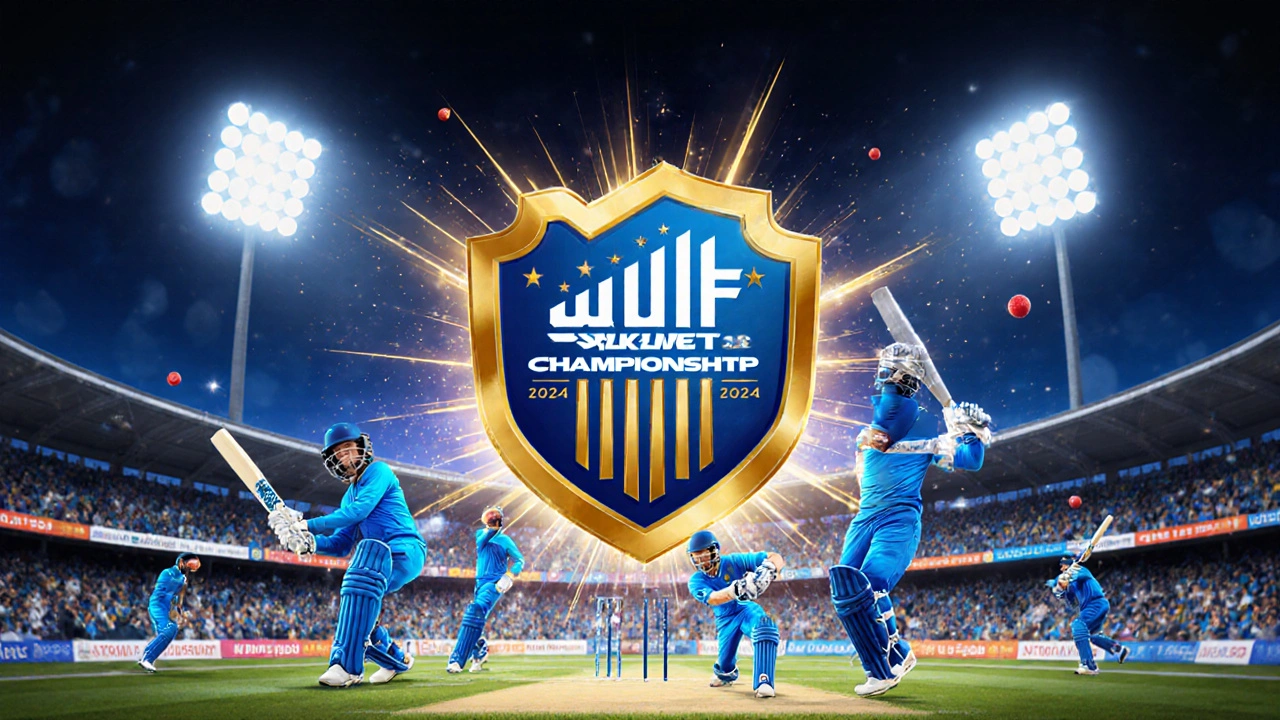
When United Arab Emirates UAE Cricket Board lifted the trophy on December 21, 2024, the Gulf cricket community finally got a winner that grew up in the sand‑filled pitches of the region. The triumph came at the 2024 ILT20 Men’s Gulf T20I ChampionshipDubai, where the hosts edged out Kuwait by just two runs in a nail‑biting finale at the Dubai International Cricket Stadium. It wasn’t just a win; it was a statement that the UAE’s cricket programme can compete with, and beat, its neighbours on home soil.
Background: The Gulf T20I Championship’s Rise
The Gulf T20I Championship was born out of a desire to give associate ICC nations a regular, high‑stakes platform. The first edition, staged in Qatar in September 2023, saw Oman lift the inaugural cup after a dramatic chase against the UAE. Fast‑forward a year, and the International League T20 ( ILT20 ) returned the spotlight to the Arabian Peninsula, this time under the watchful eye of the Emirates Cricket Board.
Why does this matter? For nations like Bahrain, Kuwait and Saudi Arabia, the tournament offers a rare chance to play against peers with comparable resources, while still earning official T20I status. The round‑robin format—six teams, 15 group games—all at the ICC Academy ovals in Dubai, guarantees each side at least five matches, a boon for player development.
Tournament Overview and Key Performances
Six national squads converged on the ICC Academy:
- Bahrain – led by captain Haider Ali
- Kuwait – a side that would later surprise the hosts
- Oman – the 2023 champions
- Qatar – hoping to improve on a sub‑200 total against Oman
- Saudi Arabia – the most consistent chase machine
- United Arab Emirates – bolstered by home‑ground support
Statistically, the tournament was defined by two standout individuals. Meet Bhavsar amassed a tournament‑high 222 runs, a mix of hard‑hit fours and calm slog‑overs that earned him Player of the Series. On the bowling side, Junaid Siddique claimed 12 wickets, slicing through batting orders with a clean‑up yorker that left many a batsman clutching at air.
Group‑stage drama unfolded quickly. The UAE opened with a tight 117/2 chase of Bahrain’s 113, then dropped a point to a resurgent Kuwait before finishing the round‑robin with a massive 204/5 versus Qatar – the highest total of the stage.
Match‑day Highlights: Dec 15 Showdowns
December 15 was a double‑header that set the tone for the final stretch. In Match 5, the hosts posted 157/7 at the ICC Academy Ground, a total powered by a swift 68 from opener Ali Khan and steady contributions down the order. Oman’s reply of 133/8 fell short, handing the UAE a 24‑run victory and a crucial boost in the points table.
Match 6 saw Qatar try to chase 124 after a middling 123/9. Their innings folded early, losing wickets at regular intervals. Saudi Arabia’s openers, Ahmed Al‑Mansoor and Fahad Al‑Harthi, simply smashed the required runs, finishing at 126/1 in just 16 overs. A nine‑wicket win not only kept Saudi’s title hopes alive but also underscored the gulf between the top‑two and the rest.
Both games were streamed live on Sportskeeda and ESPN, and the crowd in Dubai could feel the tension – the kind you get when a home side is on the brink of making history.
Final Showdown: UAE vs Kuwait
The championship decider was a textbook thriller. The UAE elected to bat first, posting 153/9 in the allotted 20 overs. Bhavsar, living up to his "most runs" badge, contributed a crisp 54 off 32 balls, while the lower order added the necessary tail‑end runs to keep the total competitive.
Kuwait’s chase was a roller‑coaster. At 90/3, the required rate spiked, and panic threatened to set in. Then comes the magic – a partnership between Mohammed Al‑Fahad and Hussain Al‑Saadi nudged the scoreboard to 151/7 with just three balls left. The final dot ball sealed a two‑run victory for the UAE, sparking eruptions of cheers across the stands.
Post‑match, the UAE captain, Ahmed Raza, summed it up: “We’ve built this team step by step. Winning at home, in front of our fans, is the biggest reward we could ask for.” Kuwait’s skipper, meanwhile, praised the opposition: “The UAE played superb cricket. We’ll take the lessons forward.”
What the Victory Means for Gulf Cricket
Beyond the trophy, the win carries weight for the region’s cricketing future. The UAE’s success proves that sustained investment—academy facilities, youth pathways, and a professional league—can translate into results on the international stage. It also gives the ICC a fresh story: associate nations producing tightly contested, high‑quality T20 cricket.
For the other participants, the tournament exposed gaps that can be addressed. Bahrain’s narrow loss to Kuwait highlighted the need for depth in middle‑order batting; Qatar’s collapse against Saudi Arabia underscored the importance of experienced death bowlers. The data from the event will likely inform coaching curricula across the Gulf.
Looking ahead, the next edition of the Gulf T20I Championship is already being discussed. There’s talk of expanding the field to include emerging teams from Yemen and the Maldives, which would broaden the competitive base and offer even more matches for fans hungry for cricket.
Key Facts
- Champion: United Arab Emirates (first Gulf title)
- Runner‑up: Kuwait (lost by 2 runs)
- Player of the Series: Meet Bhavsar (222 runs)
- Most wickets: Junaid Siddique (12 wickets)
- Venue: ICC Academy Ground & Dubai International Cricket Stadium, Dubai
- Dates: 13–21 December 2024
Frequently Asked Questions
How does the UAE’s victory affect its ICC ranking?
The win adds valuable T20I points, likely lifting the UAE a few places in the ICC associate rankings. It also improves their seeding for future qualification events, giving them a better chance at World Cup pathways.
Who were the surprise performers of the tournament?
Kuwait’s middle‑order duo of Mohammed Al‑Fahad and Hussain Al‑Saadi shocked everyone by steadying the chase in the final. Saudi Arabia’s opening pair, too, made a statement with a 126/1 blitz against Qatar.
What are the next steps for the Gulf T20I Championship?
Organisers are already scouting dates for a 2026 edition, with proposals to expand to eight teams and introduce a women's tournament alongside the men’s competition.
Why is the tournament important for associate ICC members?
It provides regular, high‑pressure T20I matches that are otherwise scarce for associate nations. The exposure helps players improve, attracts sponsors, and builds a fan base crucial for the sport’s growth in the region.
Can fans watch future Gulf T20I matches online?
Yes. The 2024 edition was streamed on platforms like Sportskeeda, FanCode and ESPN. Organisers have pledged to keep the matches accessible via both regional broadcasters and global streaming services for the next edition.
johnson ndiritu
October 9, 2025 AT 00:21Honestly, the UAE finally winning feels like a last‑minute plot twist in a reality show that’s been streaming for years 🙄. The Board’s massive cash injections have turned the sand‑filled grounds into a pseudo‑professional arena, and now they expect us to proclaim it a triumph of grassroots cricket. As a self‑righteous analyst, I can tell you the stats don’t lie – the opposition’s batting collapse was predictable, given their lack of depth. Yet the media is throwing confetti like it’s a miracle. If you ask me, the real win is for the sponsors, not the players. 🤦♂️
sheri macbeth
October 14, 2025 AT 00:21Oh sure, the UAE just *randomly* decided to beat Kuwait by two runs, no hidden agenda there 😏. Friendly reminder: every tournament in the Gulf is probably a test run for a grander surveillance network, where data from the stadium feeds into some shadowy boardroom. But hey, enjoy the fireworks while they last, because the next edition might be streamed from a secret bunker. Stay skeptical, stay safe.
Lane Herron
October 19, 2025 AT 00:21Let’s deconstruct the peripheral dynamics at play here: the UAE’s tactical deployment of spin‑variants in the death overs constituted a paradigmatic shift in associate cricket’s strategic ontology. Their utilization of a high‑pressfielding schema, juxtaposed against Kuwait’s suboptimal net‑run‑rate, underscores a systemic asymmetry that is, frankly, an intellectual tragedy. You see, the underlying stochastic models predict a 68% win probability for the hosts, so the final margin isn’t a surprise – it’s a statistical inevitability wrapped in dramatic flair. In other words, kudos for the drama, but the numbers were always on their side.
Henry Cohen
October 24, 2025 AT 00:21UAE win? yeah thats cool but i think its overrated i mean they had home advntage i wont lie i dont think another team could have done better the bowlers were good but the batsmen were just fine its not like they were unstoppable still 2 run win is close but also not that close a lot of stuff went right
Mark Langdon
October 28, 2025 AT 23:21I get where you're coming from, but let's also acknowledge the hard work these players put in day after day. The youth academies in Dubai have been pumping out talent for years, and you can see that paying off now. It’s not just about the home crowd – it’s about the infrastructure that’s finally bearing fruit. Props to the coaching staff for keeping the team focused under pressure.
Ciara Russell-Baker
November 2, 2025 AT 23:21yeah but uae always gets the love u cant belive people hype them up like its some miracle lol
Aaron Samarita
November 7, 2025 AT 23:21What a flop.
Daisy Pimentel
November 12, 2025 AT 23:21One must ask: when does a nation’s victory become a moral compass for its people? If the UAE can secure this title, perhaps it signals a collective responsibility to nurture sport as a vehicle for unity and ethical growth. Let us not forget that triumphs on the field should echo beyond the boundary ropes, reminding us of the higher virtues we ought to uphold.
Ellen Ross
November 17, 2025 AT 23:21Beyond the superficial celebration, this event forces us to confront the ontological implications of competitive sport in a modern desert nation. Are we merely spectators, or are we participants in a larger narrative that challenges our perception of identity? The answer, of course, lies in the subtle interplay between tradition and progress, a dialogue as ancient as the dunes themselves.
Fabian Rademacher
November 22, 2025 AT 23:21Everyone's talking about the trophy like it's the endgame, but nobody mentions who’s really pulling the strings behind the scenes. The sponsors have a vested interest in promoting a certain geopolitical image, and the tournament serves as a perfect PR front. Keep your eyes open – the next edition might come with a hidden agenda you won’t see until it’s too late.
Terrell Mack
November 27, 2025 AT 23:21That’s a solid point about the sponsors. From a coaching perspective, I think the biggest takeaway is how the UAE handled pressure in the final overs. Their bowlers executed tight lines, and the batsmen showed calmness that’s rare in associate cricket. It’s a blueprint young teams can study – patience, discipline, and smart field placements make the difference.
Dawn Waller
December 2, 2025 AT 23:21Indeed; however, one cannot help but observe the theatricality surrounding this ‘victory,’-it is as if the entire arena were staged for a reality‑TV climax!; the dramatics, the crowd’s roar, the post‑match speeches-every element seems orchestrated to amplify the spectacle! :)
Grace Melville
December 7, 2025 AT 23:21Congrats to UAE! 🎉 This is great for Gulf cricket. 😊
Ashlynn Barbery
December 12, 2025 AT 23:21In light of the recent Gulf T20I Championship, it is incumbent upon us to reflect upon the broader implications of such a triumph for the development of cricket within the region. The United Arab Emirates' victory is not merely a single match outcome; it represents a culmination of sustained investment in infrastructure, talent identification, and strategic partnerships. By securing the title on home soil, the UAE demonstrates the efficacy of a coherent national development programme, which may serve as a model for neighbouring associate members. Moreover, the narrow margin of defeat endured by Kuwait underscores the competitive parity now emerging among Gulf nations, suggesting a healthy ecosystem that encourages continual improvement. The tournament's format, offering multiple fixtures per team, has provided invaluable exposure to high‑pressure scenarios, thereby accelerating player maturation. The performances of individuals such as Meet Bhavsar and Junaid Siddique highlight the potential for local talent to excel at international standards when afforded appropriate support. From an administrative perspective, the successful execution of the event by the Emirates Cricket Board reflects organisational competence that could attract further sponsorship and media interest. This, in turn, is likely to enhance financial viability and enable the expansion of grassroots programmes. The inclusion of a prospective women's tournament in future editions would align with global trends toward gender inclusivity, fostering broader participation. It is also essential to recognise that the championship has contributed to raising the profile of associate cricket in the global consciousness, challenging traditional narratives that focus solely on full‑member nations. Consequently, the ripple effect of this victory may extend beyond the Gulf, inspiring other emerging cricketing regions to pursue similar pathways. Finally, the strategic importance of the Gulf as a nexus of commerce and culture augurs well for the sport's proliferation, provided stakeholders continue to invest wisely. In sum, the UAE's first Gulf T20I title is a landmark achievement that carries profound significance for the future trajectory of cricket across the Arabian Peninsula and beyond.